The livestock industry is undergoing a massive shift toward precision farming, where the efficiency of animal handling and feeding determines the overall profitability of a farm. Among the critical tools used to manage small ruminants, sheep and goat head gates serve as the primary interface for controlled feeding, medical administration, and animal sorting. By restricting the animal's movement while allowing access to resources, these systems reduce stress for both the handler and the livestock.
Globally, the demand for high-quality livestock equipment has surged as farmers move away from traditional open-pen systems toward more structured, hygienic, and automated environments. The integration of specialized head gates allows for individual animal monitoring, ensuring that nutritional requirements are met precisely. This transition is essential for scaling operations without compromising the welfare of the animals or the safety of the farm personnel.
Understanding the nuances of sheep and goat head gates is vital for any modern producer looking to optimize their workflow. From reducing feed wastage to facilitating rapid health checks, the right gating system transforms a chaotic barn into a streamlined production facility. By investing in durable, ergonomically designed equipment, farmers can ensure long-term sustainability and higher yields.
Global Industry Context of Small Ruminant Handling
The global livestock sector, particularly the production of mutton and goat meat, has seen a steady increase in demand according to reports from the FAO and World Bank. As production scales, the industry faces the challenge of maintaining individual animal health within large herds. Traditional methods of catching and holding animals are not only labor-intensive but often lead to injury and stress, which negatively impacts meat quality and animal growth rates.
To solve these challenges, the industry has turned toward standardized containment solutions. The adoption of specialized equipment like sheep and goat head gates allows farmers to implement "low-stress handling" protocols. This scientific approach to animal movement reduces cortisol levels in the animals, leading to better immune responses and more efficient weight gain, which is a critical KPI for commercial farming operations.
Defining the Function of Head Gates in Livestock
In simple terms, sheep and goat head gates are specialized restraint systems designed to hold the head and neck of the animal securely while leaving the rest of the body relatively free. Unlike full-body crushes, these gates are often integrated into feeding troughs or sorting alleys, allowing the animal to eat while being safely held in place for a quick inspection or medication dose.
From an industrial perspective, these gates bridge the gap between manual labor and full automation. They serve as a critical point of control in the farm's logistics, enabling the producer to separate animals based on health status, age, or pregnancy without the need for complex chasing or high-stress herding. This is particularly important in intensive farming where space is optimized.
The connection to modern humanitarian and agricultural needs is clear: by improving the efficiency of animal care, these systems contribute to global food security. When farmers can manage their livestock more effectively with less labor, the cost of production drops, and the availability of high-protein meat sources increases for the general population.
Core Components for Maximum Durability
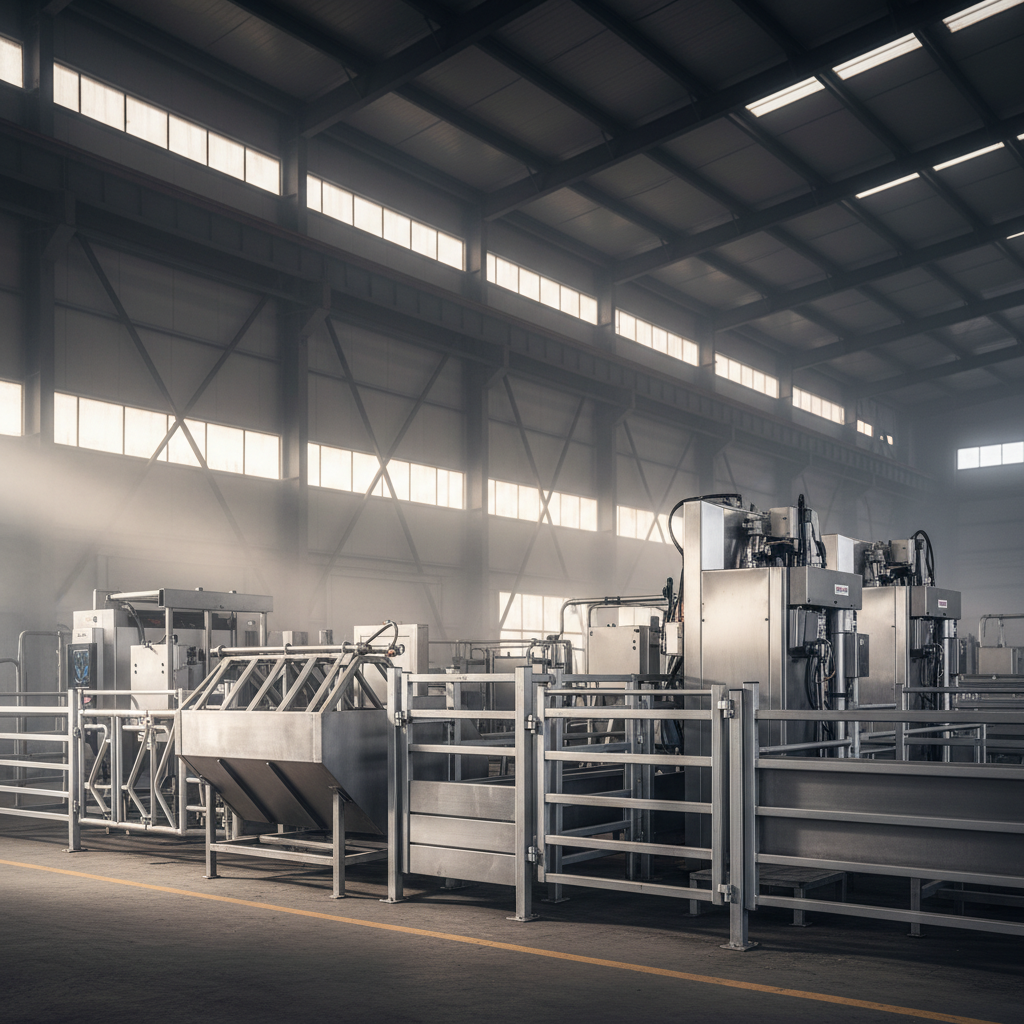
The effectiveness of sheep and goat head gates depends heavily on the materials used in their construction. High-grade galvanized steel is the industry standard because it resists the corrosive nature of animal waste and moisture found in barn environments. A sturdy frame ensures that the gate does not warp under the pressure of a struggling animal, providing a safe environment for both the animal and the operator.
Another key factor is the locking mechanism. Whether it is a quick-release lever or a sliding bolt, the system must be intuitive and fast. In the context of sheep and goat head gates, the spacing of the bars must be precisely engineered to prevent the animal from slipping through while avoiding any pinch points that could cause skin abrasions or injuries to the animal's neck.
Finally, scalability and adaptability are essential. Modern systems are often modular, allowing farmers to add more units as their herd grows. By integrating these gates with existing feeding troughs or automatic dispensers, the overall cost efficiency of the facility is improved, as the equipment serves multiple purposes—containment, feeding, and health monitoring.
Practical Applications and Efficiency Metrics
In real-world farm settings, these systems are utilized during critical windows such as vaccination drives, shearing preparation, and targeted feeding. By utilizing sheep and goat head gates, a single operator can process dozens of animals per hour, a task that would normally require a team of three or four people using traditional herding methods. This reduction in labor costs is one of the most immediate tangible benefits.
Furthermore, the use of these gates allows for the implementation of "precision nutrition." When animals are held individually, farmers can administer specific supplements or medications to only those animals that need them, reducing chemical waste and ensuring that every animal reaches its optimal growth potential.
Efficiency Comparison of Handling Methods
Global Use Cases and Regional Adoption
In the vast pastoral regions of Australia and New Zealand, where sheep farming is a cornerstone of the economy, high-capacity sheep and goat head gates are used in massive drafting races. These systems allow for the rapid sorting of thousands of animals based on weight or fleece quality, drastically reducing the time required for seasonal management.
Conversely, in the smaller, more diverse farms of Europe and North America, these gates are often used in a more specialized capacity. They are frequently integrated into veterinary stalls where precise restraint is necessary for detailed health examinations or for the administration of specialized diets to pregnant does or ewes.
Long-Term Value and Animal Welfare Benefits
The long-term value of investing in professional-grade head gates extends far beyond labor savings. From an emotional and ethical standpoint, animal welfare is now a primary driver for consumers worldwide. Reducing the stress associated with handling directly translates to higher animal welfare standards, which can be a significant marketing advantage for farmers selling "ethically raised" meat products.
Logically, the safety of the human worker is greatly enhanced. Sheep and goats, while generally docile, can become aggressive when cornered or frightened. A secure head gate removes the risk of head-butting or kicking during critical procedures, creating a safer workplace and reducing the likelihood of farm accidents.
Moreover, the reliability of these systems ensures that farm operations can continue regardless of staff experience. A well-designed gate makes the process of restraining an animal consistent and predictable, meaning that even temporary workers can perform basic tasks without compromising the safety of the livestock.
Future Innovations in Gating Automation
The future of livestock management is leaning heavily toward digital transformation. We are seeing the emergence of "smart" sheep and goat head gates equipped with RFID readers. These systems can automatically identify an animal as it enters the gate, triggering a digital record of its feeding habits or alerting the farmer if the animal is overdue for a vaccination.
Sustainability is also playing a role in new designs. Manufacturers are exploring the use of recycled high-density plastics and composite materials that offer the strength of steel but with a lighter weight and a smaller carbon footprint. These materials are also naturally more resistant to corrosion, potentially extending the lifespan of the equipment.
Automation is further evolving with the integration of weight sensors. Future gating systems will likely be able to automatically sort animals into different pens based on real-time weight data, ensuring that only those who have reached the target market weight are moved forward, thereby optimizing the production cycle.
Comparative Analysis of Gating System Technologies
| System Type |
Durability Score (1-10) |
Installation Complexity |
Relative ROI |
| Manual Steel Gates |
9 |
Low |
Medium |
| Galvanized Modular |
8 |
Medium |
High |
| RFID Integrated |
7 |
High |
Very High |
| Composite Polymer |
6 |
Low |
Medium |
| Auto-Weight Sort |
8 |
Very High |
High |
| Hybrid Fixed-Mobile |
7 |
Medium |
Medium |
FAQS
The main advantage is the reduction of animal stress. Head gates allow for specific restraint of the head and neck, which is sufficient for most vaccinations and feeding checks, while allowing the animal to maintain a more natural posture. This prevents the panic often associated with full-body confinement, leading to a calmer animal and a safer experience for the farmer.
Sizing should be based on the average breed size of your livestock. It is critical that the neck opening is narrow enough to prevent the animal from turning around or escaping, but wide enough to avoid constriction. Most professional suppliers offer various sizes based on breed (e.g., Boer goats vs. Merino sheep) to ensure a precise fit.
Yes, most modern head gates are designed with modular mounting brackets that allow them to be bolted directly onto steel or concrete feeding troughs. This integration transforms a simple feeding area into a management station, allowing farmers to perform health checks while the animals are distracted by their feed.
Due to the corrosive environment of livestock barns, we recommend a monthly check of all moving parts. Lubricating the pivots and locking bolts with a weather-resistant grease prevents rust and ensures that the gates can be opened and closed quickly, which is essential for maintaining a smooth workflow during high-volume handling days.
Galvanized steel offers superior durability and strength, making it ideal for larger animals or high-stress environments. Plastic or composite materials are lighter and easier to clean, but they may lack the structural integrity needed for heavy-duty restraint. For commercial operations, steel remains the gold standard for longevity and safety.
By allowing for the rapid and secure isolation of individual animals, these gates facilitate the early detection and treatment of illness. Farmers can quickly administer medications to a sick animal without needing to sort through the entire herd, thereby preventing the spread of contagion and ensuring a faster recovery for the affected livestock.
Conclusion
In summary, the implementation of high-quality sheep and goat head gates is a transformative step for any small ruminant operation. By combining durability, safety, and ergonomic design, these systems solve the perennial challenge of animal restraint while significantly improving labor efficiency and animal welfare. From the initial reduction in handling stress to the potential for future RFID-driven automation, the value proposition is clear: better equipment leads to better animal health and higher farm profitability.
As the global livestock industry moves toward a more sustainable and data-driven future, the role of specialized handling equipment will only grow. Producers are encouraged to move away from outdated, stressful handling methods and embrace modular, secure gating solutions that protect both the animal and the handler. For those looking to modernize their facilities and optimize their production cycle, investing in professional-grade containment is the most logical path forward. Visit our website: www.cxlivestock.com