Investing in modern poultry farming requires a strategic approach to budgeting, as the poultry farm equipment cost can vary significantly depending on the scale of operation and the level of automation desired. For many producers, understanding the balance between initial capital expenditure and long-term operational efficiency is the key to maintaining a competitive edge in the global protein market.
Across the globe, the shift toward precision livestock farming has transformed how we view these investments. While the upfront poultry farm equipment cost might seem daunting, the integration of automatic feeding systems and climate control mechanisms drastically reduces waste and labor expenses, leading to a faster return on investment (ROI).
Whether you are establishing a small-scale organic farm or a massive industrial facility, analyzing the poultry farm equipment cost allows for better financial planning and risk mitigation. By focusing on durability and scalability, farmers can ensure that their infrastructure evolves alongside their growing flock and changing market demands.
Global Economic Impact of Poultry Farm Equipment Cost
On a global scale, the accessibility and affordability of farming technology dictate the food security of entire regions. When the poultry farm equipment cost is optimized through innovative manufacturing, emerging economies can transition from subsistence farming to commercial viability, significantly increasing the supply of affordable protein.
Data from international trade organizations suggest that automation in poultry houses can reduce feed wastage by up to 15%, which offsets the initial purchase price over time. This economic ripple effect encourages investment in higher-quality materials, such as galvanized steel and reinforced plastics, ensuring that the equipment withstands harsh environmental conditions.
Defining the Components of Poultry Farm Equipment Cost
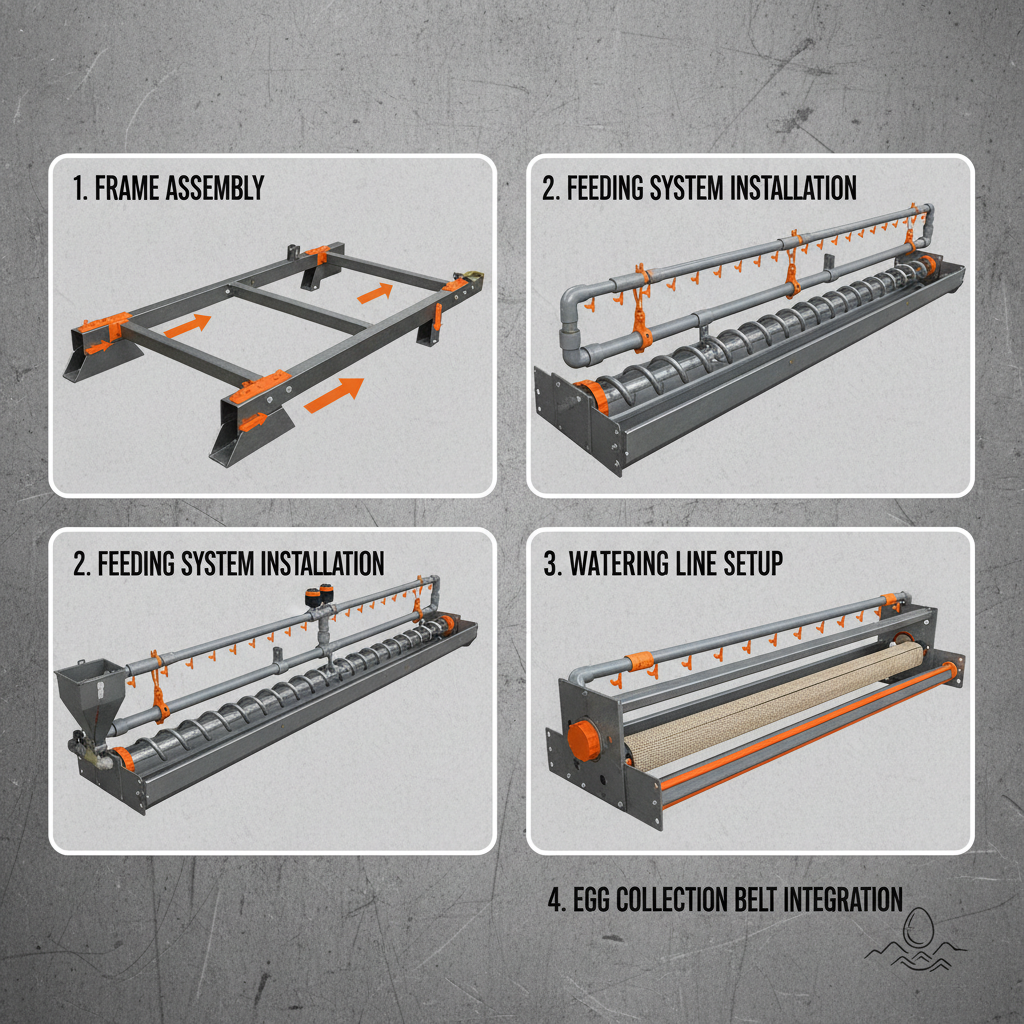
To truly understand poultry farm equipment cost, one must look beyond the sticker price of a single machine. It is a comprehensive sum that includes the procurement of feeding systems, watering lines, ventilation fans, and flooring solutions. For instance, a high-end Automatic Feeding System involves not just the troughs but the silos, augers, and electronic controllers that regulate feed delivery.
Furthermore, "cost" in this industry encompasses the total cost of ownership (TCO). This includes installation fees, the cost of consumables—such as replacement nipples for waterers or specific floor gratings—and the energy required to power climate control systems. A lower initial poultry farm equipment cost may lead to higher maintenance fees if the materials used are prone to corrosion or wear.
Modern industry standards now emphasize "smart" components. Integrating IoT sensors for temperature and humidity monitoring might increase the initial poultry farm equipment cost, but it protects the flock from mass mortality events, effectively acting as an insurance policy for the farmer's livestock.
Critical Factors Influencing Equipment Investment
Durability is perhaps the most critical factor when evaluating the poultry farm equipment cost. In the ammonia-rich environment of a poultry house, equipment that isn't properly treated or made from high-grade stainless steel will degrade quickly, forcing premature replacements that double the effective cost over a five-year period.
Scalability also plays a pivotal role in financial planning. A modular approach to poultry farm equipment cost allows producers to start with essential systems—like basic feeding troughs and water bowls—and incrementally add automated silos or advanced climate control as their bird population increases, preventing over-leveraging of capital.
Finally, energy efficiency significantly impacts the operational side of the poultry farm equipment cost. The transition to energy-efficient fans and LED lighting reduces monthly utility bills, meaning that equipment with a higher initial price point often proves to be the most economical choice over the long term.
Comparative Analysis of Cost Efficiency Models
Different farming philosophies lead to different distributions of the poultry farm equipment cost. For example, free-range operations prioritize robust exterior fencing and simple watering systems, whereas intensive indoor operations invest heavily in climate control and automated waste removal to maximize bird density.
When comparing manual systems versus fully automated systems, the trade-off is usually between labor costs and capital expenditure. While automated systems have a higher entry poultry farm equipment cost, they eliminate the need for multiple full-time staff members, which is increasingly important in regions facing labor shortages.
Comparative ROI Analysis based on Poultry Farm Equipment Cost
Real-World Applications and Regional Variations
In Southeast Asia and Africa, the poultry farm equipment cost is often managed by utilizing hybrid systems. Farmers may combine high-tech feeding lines with locally sourced building materials to keep the initial investment low while still benefiting from the precision of modern feeding technology.
Conversely, in the European and North American markets, there is a heavy emphasis on animal welfare and environmental regulations. This shifts the poultry farm equipment cost toward advanced ventilation and waste management systems that comply with strict legal standards, prioritizing sustainability over immediate profit margins.
Long-Term Value and Sustainability Gains
The true value of investing in a slightly higher poultry farm equipment cost lies in the reduction of biological risks. Automated systems ensure that feed and water are distributed evenly, preventing "bullying" among birds and ensuring uniform growth across the flock, which leads to more predictable market yields.
From a sustainability perspective, high-quality equipment reduces the environmental footprint of the farm. For instance, precision watering systems minimize water runoff and contamination, while efficient feed silos prevent spillage and spoilage, making the overall operation more ecologically responsible.
Ultimately, the psychological benefit to the farmer—knowing that their assets are protected by reliable technology—cannot be understated. The trust gained from using industry-standard equipment reduces stress and allows the producer to focus on strategic business growth rather than constant emergency repairs.
Future Innovations and Budgetary Trends
The future of poultry farm equipment cost is being shaped by the "Industry 4.0" revolution. We are seeing a shift toward AI-driven monitoring where cameras and sensors detect illness in birds before human eyes can, potentially saving thousands of dollars in livestock loss.
Green energy integration is also becoming a standard part of the budget. Solar-powered ventilation and heating systems are increasing the initial poultry farm equipment cost but are rapidly becoming the norm as they eliminate dependence on unstable local power grids.
As manufacturing processes like 3D printing and modular assembly evolve, we expect the entry-level poultry farm equipment cost to decrease, making professional-grade automation accessible to even the smallest family-run farms.
Analysis of Investment Dimensions for Poultry Equipment
| Equipment Category |
Initial Cost Impact |
Maintenance Level |
Estimated Lifespan |
| Automatic Feeding System |
High |
Medium |
10-15 Years |
| Climate Control Systems |
Medium-High |
High |
7-12 Years |
| Watering Nipples/Bowls |
Low |
Low |
5-8 Years |
| Steel Grating Flooring |
Medium |
Very Low |
20+ Years |
| IoT Monitoring Sensors |
Medium |
Medium |
3-5 Years |
| Feed Silos (Galvanized) |
High |
Low |
15-20 Years |
FAQS
For a small-scale startup, the cost varies based on the level of automation. Basic manual equipment is affordable, but a semi-automated setup (including basic watering and feeding lines) typically requires a moderate investment. It is recommended to focus on high-quality flooring and waterers first to ensure bird health, then scale up to automated silos as revenue grows.
Automation reduces long-term costs by minimizing feed waste, lowering labor requirements, and preventing flock loss through precise climate control. While the initial capital expenditure is higher, the reduction in monthly operational expenses and the increase in bird growth rates typically lead to a higher ROI within 2-4 years.
Package deals often offer a lower overall poultry farm equipment cost due to bulk pricing and guaranteed compatibility between components. However, buying separate components allows you to mix and match brands for specific needs (e.g., high-end feeders with budget-friendly flooring), which can be more cost-effective if you have a very specific operational layout.
Automatic feeding systems and climate control (HVAC) usually represent the largest portion of the poultry farm equipment cost. These systems involve complex machinery, electronic controllers, and significant installation labor. Investing in energy-efficient versions of these specific components is the best way to lower long-term utility costs.
Calculate the difference in labor costs, feed wastage, and mortality rates between a manual system and an automated one. Subtract the annual maintenance of the equipment from these savings. Divide the total initial poultry farm equipment cost by this annual saving to determine the payback period in years.
Absolutely. Using low-grade plastics or non-galvanized steel may lower the initial poultry farm equipment cost, but these materials corrode quickly in the poultry environment. Choosing high-grade stainless steel or specialized polymers increases the upfront cost but prevents frequent replacements, lowering the cost per bird over the life of the farm.
Conclusion
Analyzing the poultry farm equipment cost is not merely an exercise in bookkeeping, but a critical component of strategic farm management. From the initial selection of durable materials to the integration of AI-driven automation, every financial decision impacts the health of the flock and the sustainability of the business. By balancing the immediate capital expenditure with long-term operational gains, producers can build a resilient system that maximizes yield while minimizing waste.
As the industry moves toward a more sustainable and digital future, the focus will shift from "lowest cost" to "highest value." We encourage farmers to view their equipment not as an expense, but as a long-term investment in food security and animal welfare. To explore professional-grade solutions that optimize your budget and efficiency, visit our website: www.cxlivestock.com.