Understanding Poultry House Ventilation Fans: Why They Matter Globally
When you think of poultry farming, probably images of eggs or chickens come to mind. But behind the scenes, there’s a silent workhorse making life inside the coop bearable — poultry house ventilation fans. These are more than just machines spinning away; they’re critical to animal welfare, farm productivity, and environmental sustainability worldwide.
Globally, poultry farming supports billions of livelihoods, feeding millions every day. Without proper ventilation, the confined spaces chickens live in turn into hotspots for heat stress, airborne diseases, and poor air quality. Poultry house ventilation fans tackle these problems head-on, ensuring fresh air circulates, moisture is controlled, and hazardous gases like ammonia don’t build up dangerously.
Understanding how these fans work and why they're becoming a global staple offers insight into solving pressing agricultural challenges in both developed and developing countries. Plus, the ripple benefits affect food security, farmer income, and public health — a win that’s hard to ignore.
Why Poultry House Ventilation Fans Are Critical Across the Globe
The UN Food and Agriculture Organization estimates poultry contributes 35% of global meat production, a number only expected to climb. But with rising temperatures worldwide and intensified farming operations, stress from poor ventilation threatens bird health and product quality.
According to the World Bank, heat stress can reduce broiler growth rates by up to 20%. That’s a huge dent in supply chains and farmers’ income. What’s more, poor ventilation increases ammonia concentrations leading to eye irritation, respiratory ailments, and even higher mortality rates in flocks.
This puts poultry house ventilation fans squarely in the spotlight as practical solutions addressing animal welfare, productivity drops, and environmental emissions simultaneously. The challenge? Deploying scalable, energy-efficient fans that can withstand varying climates and farm infrastructures.
Mini Takeaway:
- Poultry ventilation fans play a vital role in health and productivity worldwide.
- Climate change and dense farming intensify the need for effective ventilation.
- They help reduce disease risk and economic losses.
What Exactly Are Poultry House Ventilation Fans?
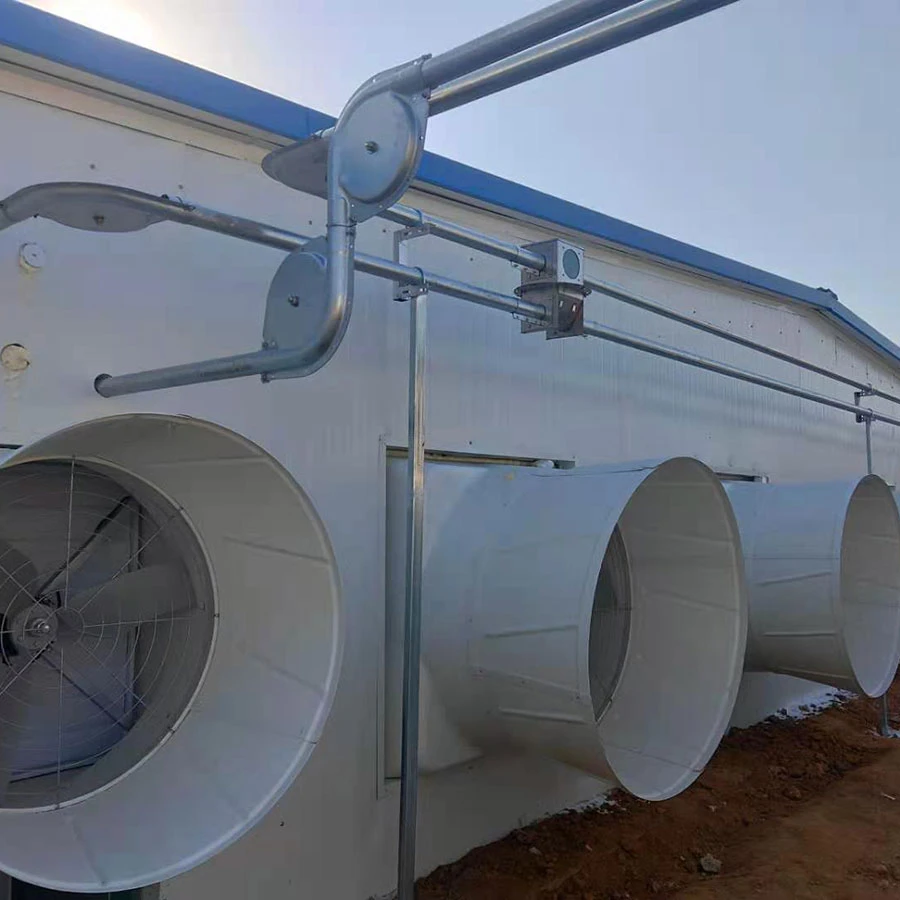
In simple terms, poultry house ventilation fans are mechanical devices that promote airflow inside poultry buildings. They remove stale air laden with heat, moisture, dust, and harmful gases, bringing in fresh air from outside. This air exchange stabilizes temperature, humidity, and air quality to optimal conditions.
Modern fans marry engineering with agricultural needs — designed specifically for farm environments. They differ from industrial fans as they focus on variable airflow, durability under dusty or corrosive conditions, and quiet operation to avoid startling birds.
More than tech gadgets, these fans support humane treatment standards espoused by organizations like the ISO. They ensure animals breathe easier and grow better, meeting ethical, legal, and business demands alike.
Mini Takeaway:
- Poultry ventilation fans drive exchange of indoor air for freshness and safety.
- They’re tailored to farm-specific environmental controls.
- Recognized globally for enhancing humane poultry farming.
Key Components Defining Effective Poultry House Ventilation Fans
Durability and Weather Resistance
It’s a dusty, humid, sometimes downright harsh environment inside and around poultry houses. Fans must resist corrosion from ammonia and moisture, plus stand up to fluctuating temperatures. Many come with galvanized steel or powder-coated frames to last years, even decades.
Energy Efficiency
Electricity bills can pile up fast on big farms. Today’s fans are commonly paired with variable speed drives and high-efficiency motors, cutting energy consumption by 20–40%, according to manufacturer data. Some farms even integrate solar panels — a win for sustainability.
Airflow Control & Scalability
Ventilation isn’t about blasting air non-stop but about precisely managing airflow. Modern systems offer controls to adjust fan speed based on temperature or humidity sensors, allowing farmers to scale ventilation up or down according to bird age and weather.
Noise Reduction
Oddly enough, noise can stress poultry just as much as heat or ammonia. Quiet fans with aerodynamic blade designs and vibration dampening are now the norm to keep flocks calm.
Ease of Installation & Maintenance
The best fans don’t require expert technicians for installation or constant upkeep. Farmers value modular parts, easy-clean blades, and accessible motors, especially in remote or developing regions.
| Feature | Typical Spec | Benefit |
|---|---|---|
| Power Consumption | 100–300W | Lower energy bills |
| Airflow Capacity | 10,000–40,000 CFM | Adequate farm ventilation |
| Noise Level | Reduces bird stress | |
| Material | Galvanized steel, plastic blades | Corrosion resistance |
Mini Takeaway:
- Durability, energy efficiency, and noise control are critical design factors.
- Customization according to farm size and climate is vital.
- Ease of use enhances farmer adoption and upkeep.
Real-World Applications: Where and How These Fans Make a Difference
Poultry house ventilation fans have found their place in quite varied settings worldwide. In Southeast Asia's tropical climates, they combat high humidity to prevent bacterial infections that can ruin entire flocks. In Canada and northern Europe, they help maintain proper temperatures indoors during brutal winters, reducing heating costs.
Commercial producers, small-scale farmers, and even humanitarian agencies rely on proper ventilation technology. For example, during Avian Influenza outbreaks, controlled airflow helped maintain biosecurity zones. Meanwhile, in post-natural disaster settings, mobile poultry units installed with ventilation fans have restored livelihoods swiftly.
Many poultry operations are now integrating poultry house ventilation fans into automated farm management platforms where climate data and air quality are monitored remotely — a neat blend of tradition and innovation.
Mini Takeaway:
- Applied worldwide in different climates and on farms of all scales.
- Vital in disease prevention and emergency agricultural recovery.
- Increasingly linked with smart farm technologies.
Why Invest in Poultry House Ventilation Fans? The Long-Term Benefits
Investing in reliable ventilation fans isn’t just operational sense — it’s about sustainability and trust. Farmers I’ve talked with often pinpoint improved flock health, with less mortality and better weight gain, translating directly into profits.
Environmentally, fans reduce instances where ammonia and other gases accumulate, lowering harmful emissions into nearby ecosystems. Socially, they uphold welfare standards, which increasingly influence market access and consumer trust. Frankly, producing ethically sourced poultry is no longer optional — it’s demanded.
Reliability also matters. Knowing ventilation will perform during heat waves or cold snaps provides peace of mind that your birds won’t be on the losing end of Mother Nature’s whims.
Mini Takeaway:
- Improves animal health and farm income sustainably.
- Reduces environmental impact and aligns with welfare standards.
- Builds farmer confidence through reliable operation.
Looking Ahead: What’s Next for Poultry House Ventilation Fans?
Innovation is humming along with advances in materials such as composites that resist corrosion longer and reduce weight. On the tech front, sensor-driven, climate-adaptive fans are reshaping how ventilation systems respond in real-time to flock needs and external weather.
Green energy integration is also on the rise. Solar-powered fan arrays or hybrid systems help off-grid farms stay productive while shrinking their carbon footprint. Plus, IoT connectivity enables remote diagnostics and predictive maintenance — a step towards zero downtime.
We may soon see fans that learn from patterns over seasons, optimizing their own runtimes and speeds without farmers lifting a finger. It feels like the industry is on the brink of a quiet revolution.
Common Challenges and How the Industry is Overcoming Them
Despite clear benefits, challenges remain. High upfront costs deter smallholder adoption in poorer regions. Energy source instability limits fan use where electricity grids are unreliable. Installation complexity and maintenance requirements sometimes overwhelm farmers unfamiliar with the technology.
Innovative solutions involve modular, affordable fans tailored to low-resource settings. NGOs have piloted solar-powered methods to reduce electricity dependence. Remote training apps and local technician programs are empowering farmers to maintain their equipment with minimal outside help.
Experts also emphasize designing fans with simplicity in mind — minimum moving parts, standardized replacements, and user-friendly controls.
| Vendor | Product Range | Energy Efficiency | Price Range | Ideal Farm Size |
|---|---|---|---|---|
| AgriFlow Inc. | Standard to heavy-duty fans | Up to 40% savings | $$$ | Medium to large farms |
| EcoVent Solutions | Modular solar-powered fans | High, solar-enabled | $$ | Small to medium farms |
| FarmAir Tech | Automated smart ventilation | Variable speed control | $$$$ | Large commercial operations |
FAQ: Your Questions About Poultry House Ventilation Fans, Answered
- Q: How do I choose the right size ventilation fan for my poultry house?
- A: Consider your coop’s volume, bird density, and climate. Generally, fans are rated by airflow (CFM). Consult manufacturer guides or a professional to match your space. Proper sizing ensures optimal air exchange without excessive energy use.
- Q: Are solar-powered poultry house ventilation fans effective in cloudy regions?
- A: Solar fans often include battery backups to maintain operation during low sunlight. While performance dips, modern solar tech combined with hybrid systems can provide reliable ventilation even in less sunny climates.
- Q: Can these fans help reduce disease transmission in poultry farms?
- A: Yes, by improving fresh air circulation, they reduce ammonia and moisture levels which suppress pathogens. Controlled airflow also limits dust and airborne bacteria spread — crucial during disease outbreaks.
- Q: How often do poultry ventilation fans require maintenance?
- A: Routine checks every few months to clean blades, inspect motors, and test controls are recommended. However, many modern fans are designed for minimal upkeep and long service life.
Wrapping Up: Why Poultry House Ventilation Fans Are a Game-Changer
So, if you’re stepping into poultry farming or looking to upgrade your setup, it’s worth giving poultry house ventilation fans a serious look. They’re more than a comfort add-on — they’re infrastructure that nurtures animal health, protects your investment, and aligns your farm with future-ready sustainable practices.
Visit our website at cxlivestock.com to explore fan options, detailed guides, and expert advice crafted for farmers just like you.
References
Post time: Dec . 02, 2025